Art as a Tool for Social Change: How Creativity Shapes Society
“Art is not a mirror held up to reality but a hammer with which to shape it.” — Bertolt Brecht
Throughout history, art has been far more than a form of creative expression. It has served as a voice for the unheard, a compilation of collective experiences, and a core substance for social transformation. Murals, photography, literature, music, and digital media, artists have continuously challenged injustice, inspired movements, and encouraged societies to imagine a better future.
Today’s fast-paced world facing issues such as inequality, climate change, discrimination, conflict, and mental health problems, art remains one of the most powerful tools for fostering awareness, empathy, and meaningful exchange of ideas. Unlike traditional forms of communication, art has the unique ability to involve both the heart and the mind, making complex issues accessible and deeply personal.
Art and Society: A Dynamic Relationship
Art and society have always shared a close relationship. Artists often respond to the social, political, and cultural realities of their time, documenting events, questioning systems, and reflecting public sentiment.
While some artworks celebrate beauty and human achievement, others encounter viewers to confront uncomfortable truths. Through visual storytelling, symbolism, and emotional expression, artists support audiences to see the world from different perspectives.
As the renowned artist and activist Ai Weiwei once stated:
“Everything is art. Everything is politics.”
This idea highlights how artistic expression can influence public conversations and contribute to broader social change.
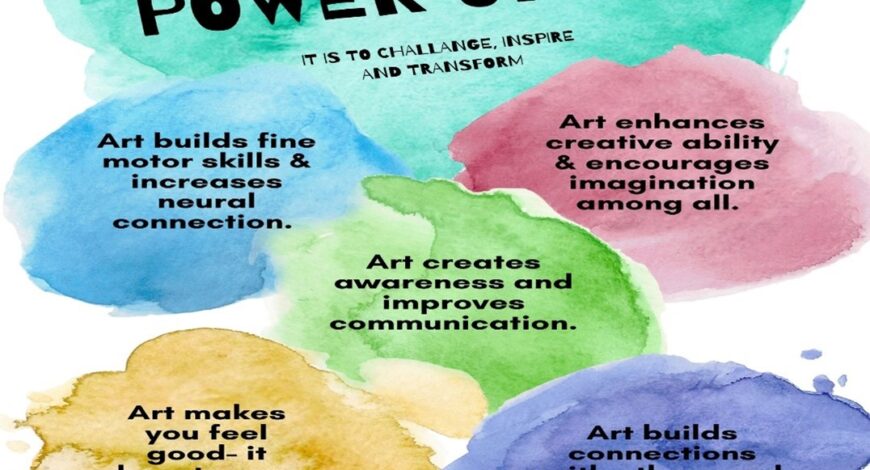
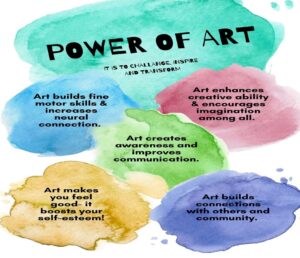
The Power of Art to Challenge, Inspire, and Transform
1. Art Creates Awareness
One of the most significant contributions of art is responsiveness to important issues.
Visual images often communicate ideas more immediately than statistics or wordy accounts. A photograph, mural, or installation can capture emotions and realities that might otherwise remain unseen.
Artists have used their work to address topics such as poverty, racial injustice, gender equality, migration, environmental degradation, and human rights. By presenting these issues in accessible and engaging ways, art encourages people to learn, question, and respond.
As artist Keith Haring observed:
“Art is for everybody.”
When art enters public spaces and everyday conversations, awareness becomes open to broader communities.
2. Art Builds Compassion and Responsiveness
Facts can inform, but stories create emotional understanding human connections.
Art allows audiences to experience situations through another person’s perspective. Whether through a painting, photograph, performance, film, or sculpture, viewers often connect emotionally with inadvertent experiences. This emotional connection can reduce prejudice, encourage compassion, and strengthen social understanding.
The celebrated author and activist Maya Angelou famously said:
“We are more alike, my friends, than we are unalike.”
Art often reminds us of our shared humanity by highlighting universal emotions such as hope, fear, love, grief, resilience, and belonging.
3. Art Gives Voice to Marginalized Communities
Art provides a platform for individuals and groups whose stories might otherwise remain unheard and excluded from mainstream narratives.
Artists from diverse cultural, ethnic, and social backgrounds use art expression to reclaim identities, preserve histories, and challenge stereotypes.
By sharing personal experiences, artists contribute to more inclusive cultural conversations and help broaden public understanding of different viewpoints.
As writer and activist James Baldwin noted:
“Artists are here to disturb the peace.”
This disturbance often sparks necessary conversations about important issues associated to justice, equality, and representation.
4. Art as a Catalyst for Meaningful Dialogue
Art rarely provides simple answers. Instead, it shakes understanding and awakens critical thinking process. A powerful artwork can encourage viewers to study their assumptions, reconsider their beliefs, and address the ongoing important social issues.
Public art, exhibitions, performances, and community projects often create spaces where diverse groups can come together to exchange ideas and perspectives.
5. The Power of Artistic Activism throughout History
The Influence of Political Posters
Throughout the twentieth century, political posters became important tools for mobilizing public opinion during civil rights movements, and social justice initiatives.
Simple visual messages often reached audiences more effectively than lengthy speeches or written documents.
Photography and Social Reform
Photographers have played a crucial role in exposing social inequalities and humanitarian crises through documentaries. Photographs have influenced public attitudes toward poverty, child labor, war, migration, humanitarian crisis and environmental destruction.
By making distant realities visible, photography has helped inspire public action and policy change.
Murals and Community Empowerment
Murals have transformed public spaces into platforms for storytelling and activism.
Community mural projects not only beautify public spaces but often celebrate local histories, honor cultural identities, and address social concerns while nurturing a sense of belonging.
Today, cities around the world use public art to strengthen civic awareness and connections.
Contemporary Art and Social Engagement
In the twenty-first century, artists continue to address pressing global challenges.
Climate Change and Environmental Justice
Many artists are using recycled materials and environmentally conscious practices to highlight ecological concerns.
Installations, sculptures, and public projects draw attention to issues such as pollution, biodiversity loss, rising sea levels, and sustainable living practices.
Mental wellbeing
Artists increasingly explore themes related to mental health, emotional development, and personal resilience.
By visualizing experiences that are often difficult to discuss, art helps reduce stigma and encourages open conversations.
Digital Art and Creativity
Social media and digital platforms have expanded the reach of socially engaged art.
Artists can now share their work globally, connect with diverse audiences, and participate in conversations that cross geographic boundaries.
Digital art, animation, photography, and online campaigns have become powerful tools for advocacy and awareness.
The Role of the Audience
Socially engaged art does not create change on its own. Its impact depends on how audiences respond.
Art enthusiasts play an active role by engaging with the work, reflecting on its message, discussing its themes, and translating their understanding into action.
Art can spark change, but meaningful transformation occurs when individuals and communities carry those conversations into everyday life.
As activist and educator bell hooks wrote:
“The function of art is to do more than tell it like it is—it’s to imagine what is possible.”
This capacity to imagine alternatives and think beyond is one of art’s greatest strengths.
Challenges and Responsibilities
While art can inspire change, it is not without limitations.
Artists often face questions about representation, ethics, censorship, and the balance between activism and artistic freedom. Some critics argue that art alone cannot solve social problems.
However, art’s role is not necessarily to provide solutions. Its power lies in raising awareness, encouraging empathy, provoking thought, and inspiring collective action.
By creating spaces for reflection and dialogue, art contributes to the cultural foundations upon which social change becomes possible.
A Way Forward
As societies continue to confront complex global challenges, art plays a pivotal role to bring change. Artists, cultural institutions, educators, and communities all support creative practices that encourage inclusion, understanding, and engagement.
Whether displayed in galleries, painted on city walls, shared through digital platforms, or performed in public spaces, art has the capacity to impact people in diverse context.
Final Thoughts
Art is more than decoration or entertainment. It is a powerful form of communication capable of shaping perceptions, amplifying voices, and inspiring action. By creating awareness, building empathy, encouraging dialogue, and giving visibility to underrepresented experiences, art contributes to social progress in ways that few other forms of expression can achieve. The most influential artworks do not present the art in its simplest form but it triggers to think beyond the turning point. Art impacts to reimagine the situation.
As Pablo Picasso famously stated:
“Art washes away from the soul the dust of everyday life.”
And sometimes, in doing so, it also awakens the courage to change the world.
Previous Post